
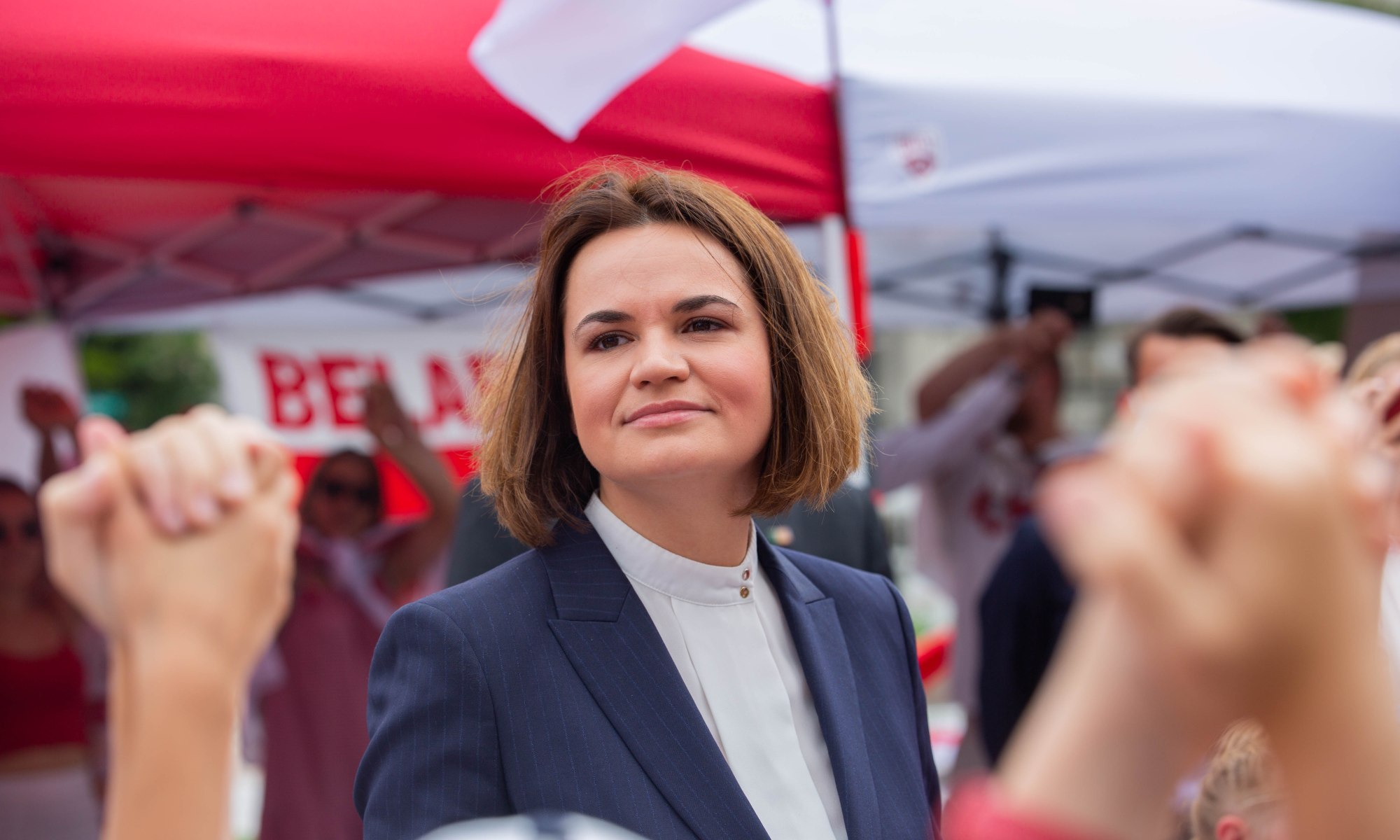

Although she rallied hundreds of thousands of supporters to the streets, she was unable to assume office from the current ruler, Alexander Lukashenko, and was forced into exile. Her husband, Siarhei Tsikhanouski, is serving a 19-year prison sentence in Belarus and is being held incommunicado. As of March 9, 2025, two years have passed since Tsikhanouskaya last had any contact with him.
Nominated for the Nobel Peace Prize in 2021, Tsikhanouskaya has become a symbol of peaceful resistance and leadership. W Insight met with her in Vilnius, where she discussed her vision for modern leadership, the path to freedom in Belarus and beyond, and her advice for emerging women leaders considering a political career.
Joanna Socha: What’s your definition of leadership?
Sviatlana Tsikhanouskaya: Leadership is responsibility. I have never been a leader by nature. I was always just an ordinary woman—living with my children and my husband. Of course, I had professional ambitions, but they were never about leadership. But when life put me in circumstances where I had to lead, I took on that responsibility.
I believe there are two types of leaders: those who see politics as a way to listen to and serve people, and those who simply seek power. But my question is—power over what and whom? Do you want power just to prove your opinion is right? Because a true leader seeks consensus and balance in a divided nation. True leadership is not about authoritarianism.
We see leaders of powerful countries framing leadership as power and strength—sometimes even through aggression or intimidation. Do you think the global perception of leadership is evolving?
I think the fight between democracy and autocracy has always been there. But we hear more and more people say, “I don’t want to talk about politics.” That’s a very dangerous approach. That’s when dictators start playing their games and poison the minds of democratic societies. Democracy needs protection, and only the people themselves can provide it. When they avoid taking responsibility and choose to simply move on with their lives despite some discomfort, they allow autocracy to grow. When you allow autocrats to rise, you willingly surrender your power.
Some take democracy for granted. We see it in the EU and the U.S., where people have lived under democracy for so long and might say it’s inefficient. They might believe that a leader with a strong hand could solve all their problems. But societies that still have democracy should respect and cherish what they have, even if it sometimes feels too bureaucratic or too slow. They should appreciate governance where leaders listen to their people and protect the interests of the nation.
Dictators excel at forming alliances and learning from each other. We see Belarus as a testing ground for autocrats. We’ve witnessed massive repression, with people detained and sentenced to 20 or 25 years simply for speaking their minds. Other dictators see this, and when these crimes go unpunished—when people grow tired and stop fighting—the governments are emboldened to repeat the same tactics in their own countries. Only a strong response from democracies can stop this.
Autocracy is like cancer. Once it starts growing, it spreads—consuming towns, then entire countries. That’s why democracies and their people must stand united and show their teeth. They must prove that they have the tools, the strength, and the will to fight for freedom.
Sviatlana Tsikhanouskaya
We see increasing radicalization in public debate, with extreme voices dominating and nuance getting lost. Is radicalization now an unavoidable reality of modern politics?
The world may indeed be radicalizing at the moment, which is why this is such a crucial time in history for societies to demonstrate their strength. We see harmful narratives spreading, including statements like: Why should we help those fighting against dictatorship? Why support Belarus or Ukraine—countries so far from our own? Why not just focus on our own lives? Things are fine for us, so why worry about others somewhere else in the world?
But this kind of thinking makes people blind, deaf, and irresponsible in the long run. If one day an enemy comes to your doorstep, other nations—accustomed to this same moral indifference—might say the same thing. It’s about global responsibility.
How should people respond in that case? We see citizens in historically democratic countries struggling to even voice their opposition to some of their leaders’ questionable decisions. Should they take to the streets?
Look, I don’t want to speak on behalf of other nations. But if you see that your rights are being undermined and democratic institutions are in danger, you need to be vocal about it. In a democracy, you have many instruments at your disposal: you can appeal to parliamentarians, go to court, or organize public demonstrations.
But what’s the difference between a democracy and a dictatorship? In a democracy, you have the right to express your opinion without risking years in prison.
With so much happening in the world—Trump’s second presidency, tensions between Russia and Ukraine, U.S.-Europe relations, and the crisis in Gaza—do you feel these global events have overshadowed your efforts to keep the fight for freedom in Belarus in the spotlight?
Absolutely! Attention to Belarus has been decreasing lately. But it is our responsibility as Belarusians to keep our cause high on the agenda. Without a democratic Belarus, there will be no peace or security in the region.
Look at Latvia—they had to restrict border crossings because migrants are now heading to Poland through Belarus. Poland had to build walls to protect itself. We understand why, but it is painful for Belarusians to see these walls rising between us. As long as dictators remain in power, you will live in constant stress, under constant blackmail. That’s why Belarus must be addressed alongside Ukraine. Europe’s border should extend to the eastern border of Belarus. Belarus must be part of the European project.
You and your family have faced significant hardships due to your opposition to the Belarusian regime. What sustains your strength and motivation, and how do you take care of your health and well-being, knowing that the struggle is so uneven and that change in Belarus may not come anytime soon?
First of all, I don’t allow myself to think that the situation won’t change. When it comes to Belarus, the pain of what’s happening is my strongest motivator—pain for our beloved people, for friends who are imprisoned, and for Belarus as a country. Pain from watching Lukashenko sell Belarus to Putin piece by piece.
Sviatlana Tsikhanouskaya
Solidarity is also a huge motivator. When I see other countries and foreign leaders from Poland, Lithuania, and across Europe trying to help us, it gives me hope. Unity is more important than ever. I know people are tired, but I don’t want them to lose hope just because it’s taking too long. We cannot give up. I always think about the Polish movement Solidarity (Solidarność)—they didn’t give up, and in the end, it worked! It may take time, but we cannot let ourselves grow exhausted and assume things will change on their own. We must keep fighting, and keep contributing our energy and professionalism to this cause.
W Insight is a platform for women emerging as leaders and exploring different career paths. What would you say to women considering a political career, given today’s geopolitical uncertainties and the inevitable pressures—and, in some cases, dangers—of this path?
I would encourage women to seriously consider this path. I’m glad to see more and more female leaders emerging on the European political stage, particularly in the Nordic countries. I think we should look to these nations as examples because societies with more women in politics tend to be more peaceful.
Women excel at negotiations and finding unity. They are great multitaskers, capable of achieving many things at once. They also have strong empathy, and when they are ambitious, it’s not about their ego – it’s about contributing to society.
Sviatlana Tsikhanouskaya
Can you imagine yourself back in Belarus one day?
Absolutely! I want to return home. I feel safe in Lithuania, and we (Belarusians) feel safe in Poland, but we want to go back. You should understand that Belarus has been under direct Russian influence for about two centuries. But it wasn’t always like that. Mentally, we are Europeans. Now, we must return our country to its roots—to its native family of nations. That is how we will ensure peace, stability, and security on our continent.
We also need a strong Europe. This is a critical moment for Europe—to stay united and remain strong. Sometimes, I think Europe is so powerful, yet it doesn’t fully believe in its own strength.
Coming back to your first question, leadership should not be about aggression or brutality. But it should be about bravery, it should be about courage: Europe should be braver!
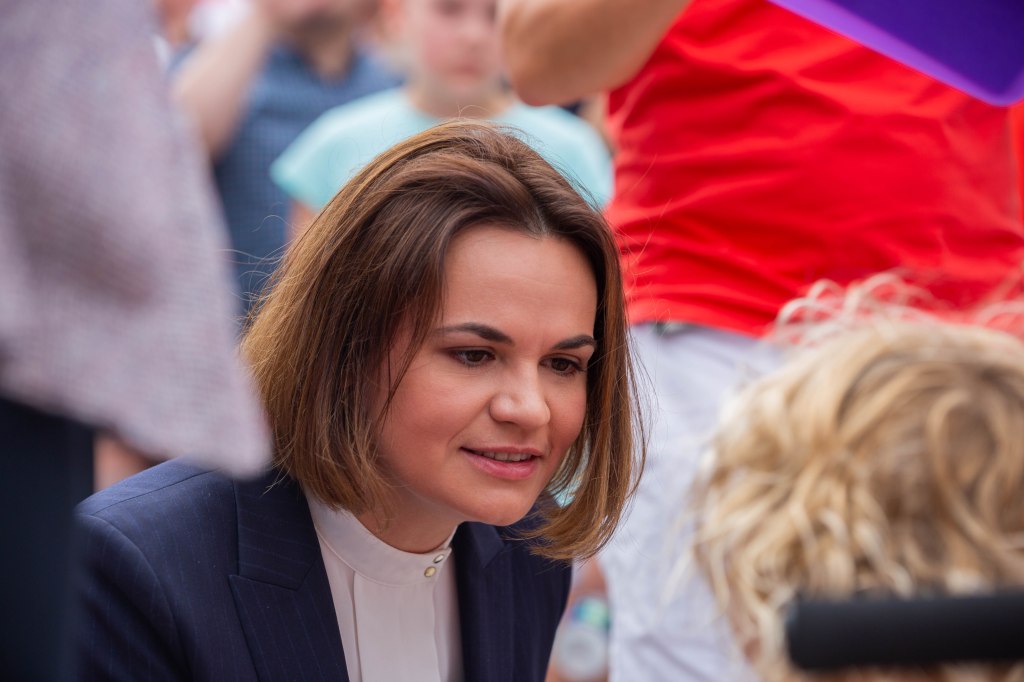
Interview by Joanna Socha
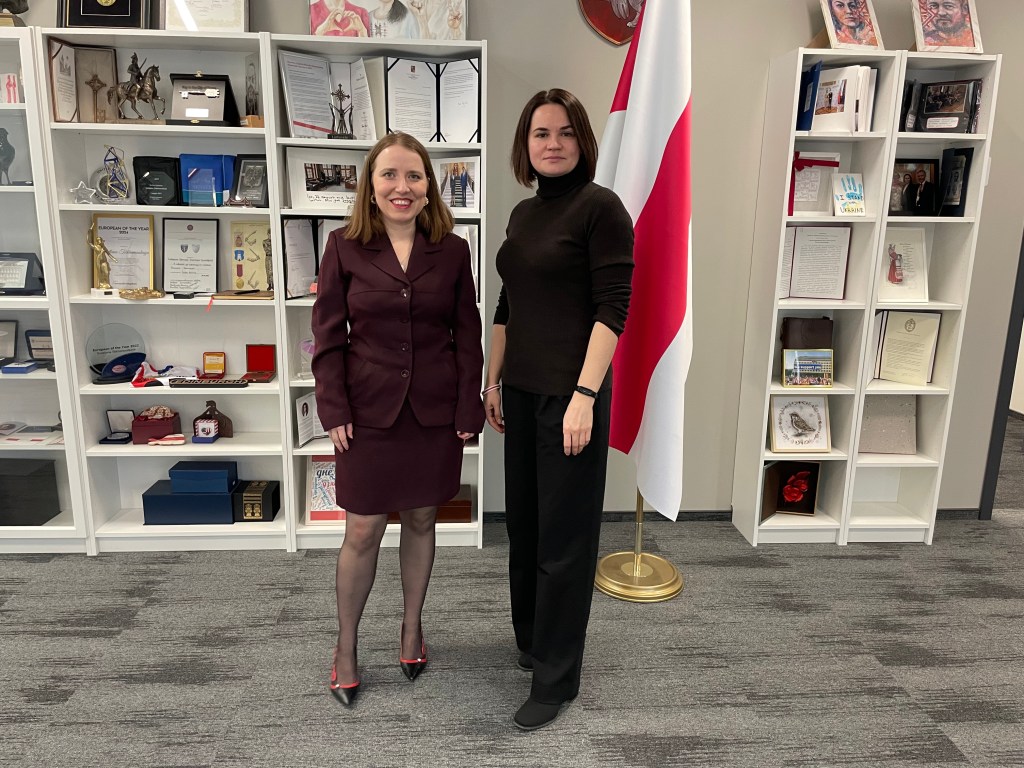
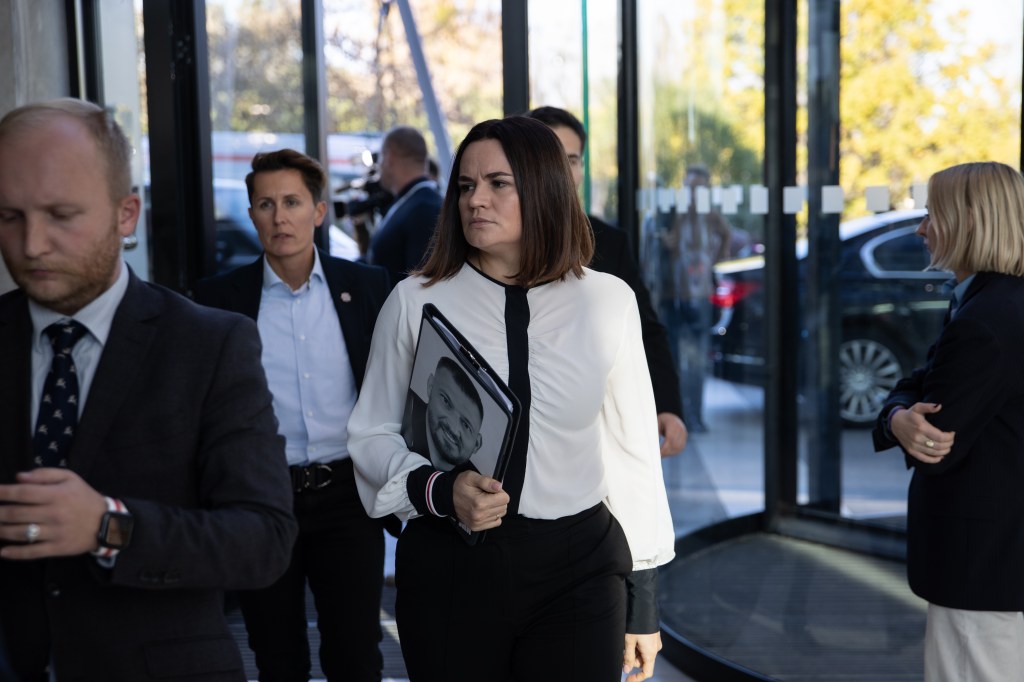
All photos, except the one featuring Joanna Socha, were provided by Sviatlana Tsikhanouskaya’s office..
 W Insight
Although Ms. Tsikhanouskaya did not aim to become a leader, she has grown into a remarkable one. Thank you for such an inspiring interview. I hope European allies will continue to support her and the Belarusian people on their journey to freedom.
LikeLike