
In an interview with W Insight’s editor, Joanna Socha, the entrepreneur discusses developing a company with her mother and sister amid personal life crises.
Joanna Socha: “You can have it all!” True or false?
Agata Borzym: False. I once heard a radio interview with some CEO of a big financial institution. She claimed that even though she was extremely busy, she spent quality time with her child and was able to give them 100% attention during that short time. I thought it couldn’t be true! You can’t measure time with a child in exact hours. Having children is also making a snack in the morning, driving them to school, being there when they come home, and want to tell you about their day in person.
Joanna: That’s not corporate life…
Agata: Exactly! Life goes on its own course. You can’t be a phenomenal employee, manager, and leader and “parent of the year” at the same time! So the art of balancing it all is deciding when you can focus on work and when you need to set it aside. Now, expecting a difficult period in my personal life, I’m in the privileged position of being able to take leave and hand over control of the company to someone else. I completely disconnect.
But do you really disconnect, or do you still check your emails in the morning?
I completely disconnect. But that didn’t happen overnight. When we started a few years ago with a small team of my mom, sister, and I, in a little lab in the countryside, we couldn’t disconnect. There came a time when it was extremely hard. None of us had any business education. I come from an artistic background, from a theater academy.
I then realized what success really costs. Because for my family, it meant two depressions and anxiety.
About six years after starting the company, I understood that this wasn’t sustainable. Today, we have a four-person management team, and we understand that you can’t work non-stop.

Could you talk more about what was a typical day back then for you?
From the start, we’ve been reinvesting everything, but the team was always too small to respond professionally to every need. Especially when we entered retail chains. Suddenly, we had to change warehouse rules, implement systems, prepare trade materials expected by our partners.
Then the calls started: “I’m waiting for this table or proposal by tomorrow, noon.” And that meant sleepless nights. If, on top of that, my child had a kindergarten event the next day and needed a costume, I’d make the costume in the evening, put my child to bed, and then work at the computer through the night. And this kept happening, more and more.
Then there’s financial responsibility. Let’s say you get a large order from retail stores for holiday sets. On one hand, a sales spike is exciting! Great, we celebrate, it’s a deal worth hundreds of thousands. But it also means you have to secure financing for production. And then come the banks, loans, one bank says no, and you start wondering if you’ll meet the timing because the retail chains won’t wait. These are high-pressure situations. You have to deliver if you want a long-term partnership. And all of that accumulated pressure really affected my mental health.
Was there a specific moment when you thought: “I need to change something”?
Yes.
There was one day about three years ago, when I arrived at work, sat at my desk, looked at my never-ending to-do list, and thought to myself: „I’m not going to take care of this until I find psychological help.”
It was also connected, of course, to a difficult situation at home. I have three children, and back then, I was going through a divorce.
Don’t you get the impression that the media sometimes push this “successful women have it all” narrative?
It seems to me that the media often show women as superhuman: Look how she manages everything! We should all strive for that! It’s very much the “you can have it all” message.
When my marriage was falling apart, I met a friend of mine who has a child with disabilities. We sat down together, and she said, “I admire you,” and I said, “I admire you too.” Then we started laughing, and I said, “You know what? Instead of admiration, I’d rather have a little more time, peace, and harmony.”
It might sound strange, but sometimes I really dream of a model where I’m at home, just cooking soup. Of course, I say this a bit tongue-in-cheek, because I could never just sit at home and cook. I have my passions. I love them.
But I think the hardest part of all this is the financial burden. If you are, for example, the person financially responsible for your children, and in a sense also financially responsible for the organization, the tension that comes with that is really difficult to manage.
Do you feel that you have since worked out a better balance between business and personal life?
Yes. First of all, I went through therapy and received support, giving myself time to regain balance. Through hard work, I managed to develop a kind of trust in what’s happening in my life. I realized that there are many things I have no control over; they just happen, and worrying about them changes nothing.
So it’s about acceptance?
Absolutely. Over the past two years, things have been, well, absolutely crazy in my personal life. After finishing my therapy, stopping medication, and feeling in harmony again, my mom got diagnosed with cancer. Her disease progressed rapidly over about six months.

My mom’s passing was only really the start of a rollercoaster. Just a month later, I went to Spain because my partner had to have a very complicated heart surgery.
The surgery was successful! It gave him a second chance at life. But while we were still in Spain, I got a call: my eldest son had an accident and broke his spine. The accident left my 18-year-old disabled and wheelchair-bound. My life flipped upside down again, and I had to make incredibly difficult decisions.
My sister and my sister-in-law stepped in to manage the company, and our operations director also helped tremendously. Even though we aren’t family, we’ve grown close and built a strong partnership. I could rely on them all professionally and personally, and I knew the company would keep running in my absence.
Your business seems to have run in the background of all your personal tragedies. Looking back, but knowing what you know now, would you have done things differently, maybe chosen a corporate job with fixed hours and less financial and emotional responsibility?
No. First of all, I don’t think about my life in terms of regret. That doesn’t mean I haven’t made business mistakes, because I have. As the founders of the company, my sister and I have made plenty: starting with something as simple as branding. If you look at our product lines, you can see that sometimes we’re inconsistent in our visual identity. That definitely makes it harder to build a recognizable brand.

Of course, if we were starting now, we’d probably develop our portfolio more strategically and stick closely to certain rules. But the truth is, our somewhat scattered portfolio reflects exactly who my sister and I are, what we like. It shows that our company is closely tied to our personal preferences, our lives, and our design choices: we make products we would want to use ourselves. We’re consumers who love change, trends, and new things, and that naturally shows in our branding and product ideas.
I would start the company again. I consider it one of the greatest gifts in my life and an amazing experience to work with my mother and sister. It also taught us to separate private life from professional life.
In the early years, even holiday gatherings would end up in business discussions. Eventually, our family said, “Enough, we don’t want to hear about work anymore.” Now, my sister and I have learned to maintain boundaries.
Let’s start from the very beginning. Tell us about how the idea for this business was born.
My parents owned a small laboratory and a piece of land about 70 km from Warsaw, in a rural area with apple orchards and fields. The lab was actually in a completely different field, focused on animal nutrition research. But they had the space, the lab equipment, the technical ability to experiment.
One day, my mother and two of her university friends came up with the idea of creating natural cosmetic products. The friends had some foreign books on making natural cosmetics, and my mom had the lab. That’s really how it started. She started blending creams, lotions, and natural soaps from raw ingredients. This was 15 years ago, and back then natural products were almost nonexistent in Poland.
At first, they were just experimenting, but my mother started bringing the products home, showing us how wonderful they smelled. It was so engaging. You could immediately see the difference in the skin. For example, I started washing with traditional handmade soaps and noticed there was none of that tight, dry feeling over time.

My mother decided that if she was already a chemist, she might as well get a degree in cosmetology. She was over 50, had three grown children, and enrolled in a two-year program with students in their twenties at the Technical University in Łódź. By then, my sister and I had started helping her prepare to turn this into a business. But in the beginning, it was all driven by passion and personal preferences.
We started distributing products to friends and acquaintances; it was very organic. Step by step, we built an online store, then went through all the steps of setting up a legal business. Thinking about it now, it’s incredible how much work it was, especially when you have your own production. It’s very different from just having a marketing idea and finding a partner.
When you were starting out, did you expect it would turn out to be so difficult?
No. I think we were so passionate about it.
Maybe if you’d known how hard it would be, you might not have done it. And that sort of delusion kept you going?
Honestly, I don’t think anyone or anything could have stopped us. I remember my sister and I participated in a mentorship program called Business in Women’s Hands, run by a Network of Entrepreneurial Women in Poland. I remember one of the opening lectures and a business angel, a woman 15–20 years older than us, a seasoned investor, said: “No way I would ever invest in a cosmetic business. Not unless I had a contract with Rossmann (edit. one of the largest European drug store chains)”
And there we were, with our entire business plan outlined, all our ideas, and most importantly, all our hearts put into it. And we thought: Wow, someone so experienced is telling us it’s a bad idea. But we were already too far in to back out, and we believed too much in our vision.

So the lesson here is that sometimes you just have to trust yourself.
Yes, and that really worked for us. I suspect that if we had put the idea into an Excel sheet back then, we might have realized that, financially, it didn’t quite add up. But there’s another side to it. The investor mentioned Rossman. We thought – okay, let’s fight to get to Rossman! And we did!
And honestly, it’s such a joy to see the tangible results of our work in our hands when we enter a drugstore.
I feel really lucky to have seen almost 300 of “my children” on the shelves of different chains: our products that we’ve released and that accompany me every day.

***
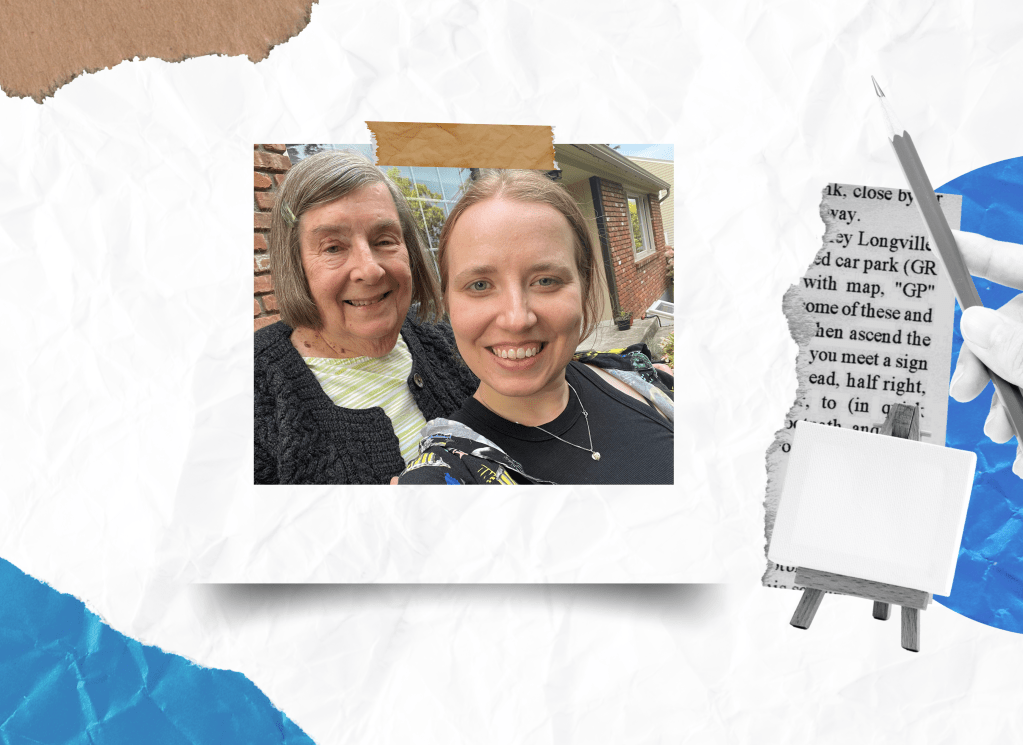
All photos were provided by Agata Borzym.

 W Insight
Leave a comment