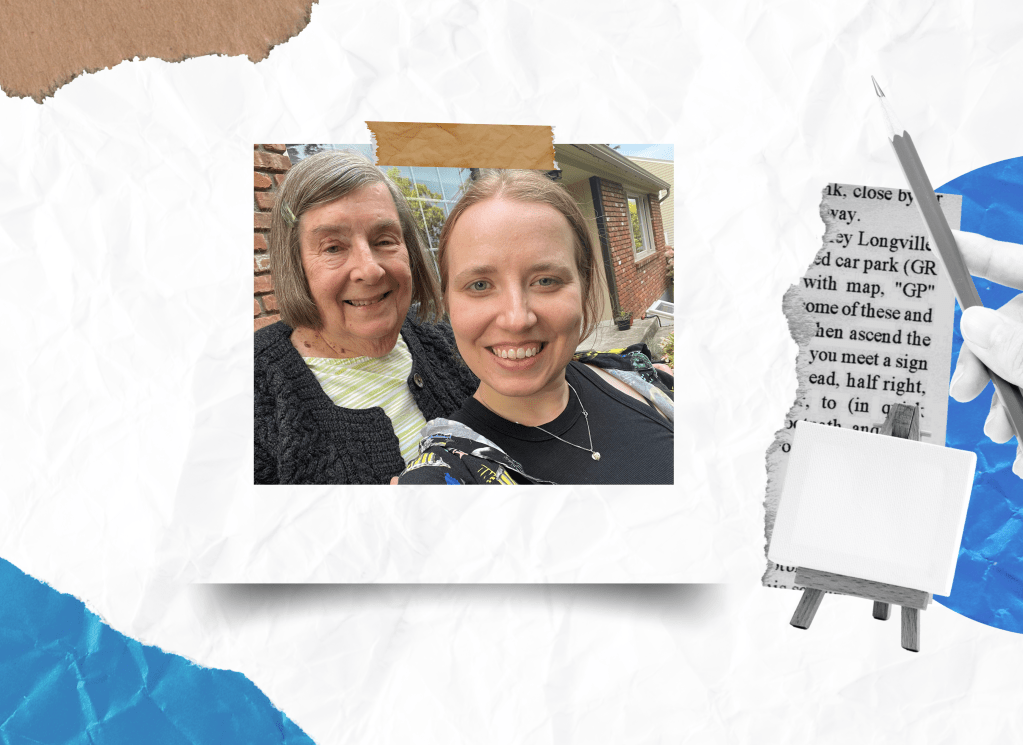
A Schenectady native and genealogy lover (and a W Insight mentor), Phyllis Zych Budka has dedicated the past several decades to tracing her roots in Poland and Lithuania, as well as galvanizing other Schenectady locals to explore and share their family stories through a newsletter: Project To Discover Schenectady County’s Eastern European Roots. During that time, she deciphered countless handwritten documents, traveled to Central and Eastern Europe many times, and reconnected with a family she had never met.
In this intergenerational discussion with Joanna Socha, Phyllis shares a glimpse into the benefits of knowing where you and your close ones came from.
Spoiler alert: the list of benefits is long.
Joanna: Phyllis, I’m so happy to be interviewing you today after so many years of knowing each other. I think it’s really exciting because I believe people reading W Insight should actually learn about you. They should get to know you not just as a W Insight contributor, supporter, and advisor, but also as my dear friend and someone with so many extraordinary experiences.
But in this interview, I wanted to focus on your strong interest in genealogy, because I know that’s something you’re really passionate about, especially local family history. In your W Insight bio, you mention that many trips to Poland and Lithuania helped you discover your ancestral history and build connections and friendships that continue with the help of the internet. So that’s what we’re going to talk about today.
I know that for many years now, you’ve been engaged in genealogy projects. How did this passion ignite in you?
Phyllis: I grew up in Schenectady, and I knew that my grandparents came from what is today Poland and Lithuania, but I didn’t know much more than that because people just didn’t talk about it. And for some reason, I became curious. I knew that one of my cousins had, all through her teenage years, been interested in our family history, and she even wrote some of it down.
So I thought, “Well, I’m traveling to Poland, let’s see if I can connect with people in Lithuania who are still alive” I didn’t know them at all, but little by little I started making connections, and we got to know each other. That’s my mother’s side of the family in Lithuania.
We began to talk. Some of them wanted to improve their English, and of course, with the internet, Zoom, and all of that, we were able to connect even more. Facebook was just becoming popular after our program in Kraków (edit: Joanna Socha and Phyllis Budka met during the Kosciuszko Foundation English Language Camp in Kraków in 2008: Phyllis was a teacher, Joanna was a student). Many of the students from that group were signing up on Facebook, and I thought, “Well, if they’re there, I’ll join too.”
So that’s how it all began. Around that time, online translation tools were just starting to translate Polish to English. Not perfectly, but a little bit, and over time they’ve gotten much better so that helped a lot.
I was never really interested in history before, and I didn’t know much about Polish history either. But through travel, and over time, I’ve made many friends. My family has become more aware of these connections, there’s still more to uncover, and I’ve been completely fascinated by it all.
Joanna: And what started as a personal interest soon turned into a newsletter called Project to Discover Schenectady County’s Eastern European Roots, where people from Schenectady shared their stories.
From my perspective, it’s really inspiring that in such a small community there were so many stories of immigration and finding a new life. So I’m wondering – how did you encourage others to join and participate in this newsletter?
Phyllis: Well, I went to our historical society and asked, “What do you have on the Poles who came to Schenectady?” They had very little. A couple of people realized I was working on this and decided to join me (Bernice Izzo, Carole McCarthy and Martin Byster). Eventually, the historical society said, “Okay, we’ll let you have a space for a gathering of people interested in this project.” So people came, and we asked, “What would you like us to do?” A few people suggested starting a newsletter.
And here again, the internet was critical. We began collecting stories, and I loved editing them. I didn’t want to write someone else’s story myself, but I did find space to include a few of my own. Over time, I kept collecting more stories as I learned more and more about local family history.
Joanna: Was it just the stories of people with Polish roots, or also from other countries?
Phyllis: Eastern Europe. Because I knew we had people from what was then Czechoslovakia and from Lithuania. Word got around, and some people said, “Oh, I’ve written one story, it’s this long! But I’ve got another one to contribute.”
And, strange as it may seem, we ended up with a distribution list of over 200 people, not just from the immediate area, but even a few museums out west. I was fascinated, because by that time I knew that Nowy Targ, in southern Poland, was where both my paternal grandparents were born. Looking through records, I found at least 45 individuals who had come to Schenectady from there in that same time period.
I already suspected that people from Nowy Targ had settled in Schenectady because when I walked through the cemetery in Nowy Targ, I saw tombstones with surnames I remembered from growing up. I love to write, I love Microsoft Word, and people loved that the newsletter was free. Eventually, we were allowed to post our issues on the public library’s website, and they’re still there today.
And the really interesting thing is that eventually people in Poland and Lithuania – my cousins – started saying, “Hey, I have a story for you!” That was a few years ago, and I’m very proud of that website. I’ve learned so much more about both sides of my family through it.
Joanna: And today, before our interview, I read through some of the newsletters. I particularly enjoyed the very first one from a few years back. I was really struck by how much patience and dedication you showed. Sometimes you spent months or even years deciphering documents from archives. You also traveled to places where your grandparents lived, and you kept in touch with people who helped you understand more, by sending emails, following up, keeping those connections alive.
Here is a fragment that I love from one of the newsletters:
“Imagine yourself walking the streets of a southern Polish town and feeling as if you have been transported back in time more than 60 years to the Mont Pleasant Schenectady neighborhood where you grew up. That’s how I felt on each of the 3 occasions when I visited Nowy Targ, Poland, the birthplace of my paternal grandparents, Rozalia Rozanska Zych and Jozef Zych. My first visit, in 2008, was a three hour walk in the beautiful hillside cemetery overlooking the town. Was this REALLY their birthplace? I was just at the beginning of my genealogy quest, and not quite sure of the answer. But there were several tombstones with the Rozanski and Zych surnames, including a very imposing granite mausoleum at the entrance to the cemetery with “Rozanski” carved on it. As I walked around the cemetery, what struck me was that I saw several other surnames on the stones that were familiar to me from my home community in Schenectady! On our way out of town, we passed the firm, “Zych Off Road Vehicles.” Was this a cousin?”
PROJECT TO DISCOVER
SCHENECTADY EASTERN EUROPEAN ROOTS
NEWSLETTER, June 2014 Vol. 1 No. 3
It all sounds like such meticulous work. And for some young people who are used to instant feedback, social media, and dopamine highs, it might even sound exhausting. And yet, you keep going. So I wanted to ask you: what gives you the energy to dig deeper and do this kind of hard work? What’s the real reward for you in it?
Phyllis: It’s just this big puzzle! And I’ve had visits from relatives in Poland and Lithuania, and my family here got to meet them. I enjoyed the travel, though I’ll admit, I don’t enjoy cobblestones! But now, as I’m getting ready to retire, I realize there may still be more stories out there waiting to be found.
Recently, I had a visit from a young woman who grew up here in Schenectady. She lives elsewhere now, but she was writing her family story, and we have a few of those in the set of newsletters. She came across me because her cousin found a copy of the book I put together about my parents’ Polish theater group that was active in the 1930s. She recognized some familiar surnames from her family, so she reached out to me.
It turned out her first cousin was actually in my high school class – I knew her! And this young woman said, “Phyllis, I told so-and-so she should write more of our family story.”
So I was always available to help people who had pictures and stories but didn’t have the tools: scanners, software, that kind of thing. One of my childhood friends started writing his own stories, and he told me he still has more in him, and I thought, well, at our age, why not? So that’s the reward. Hearing back from people and getting more stories.
Joanna: So it’s basically like detective work: discovering something and learning as you go. It sounds exciting. Have you ever had an “aha” moment, when after months of research something suddenly became clear? Could you give an example?
Phyllis: It was more like a negative feeling at first — why is it so hard to find the connections? But I did my DNA tests in 2016 and joined a few ancestry groups. When I met my Lithuanian cousins, they all had a strong sense of their own history, and they said, “Well, let’s do this or that.”
We had a couple of reunions, and there were people in that family who knew about certain documents and shared them. Language has been a barrier, but once we got to know and trust each other, we could translate things and make sense of them.
I’m hoping that somehow we can do a bigger project and gather even more stories, it doesn’t cost us anything. One of my favorite stories happened several years ago: a young man contacted me after the Historical Society told him, “Hey, you’re researching your Polish background – contact Phyllis.” I didn’t know him, but we met at noon on a Saturday at St. Mary’s Cemetery, and I thought, “Oh my God, this is a good story for something.”
He was wrestling with the spelling of names, which is always a challenge in genealogy. Eventually, he started a group for genealogy research where he was living. We talked, but I hadn’t kept in touch for quite some time. Recently, I saw on Facebook that he’s teaching others how to research and document family stories. He lives in Maine now, but he’s coming to Schenectady in the spring to give a talk to our historical society about five people of Polish background who became famous.
One of those five I learned about recently through the research of a Polish historian, Anna Mazurkiewicz. I met her – she was trying to find out where her subject, William Tonesk, grew up. I didn’t know him or his story. Now I’m thinking maybe we should continue to dig. There are no bad stories. There are only stories of entrepreneurship and people doing interesting things. I think we should continue to pull on these threads.
And fairly recently, I finally met some living cousins in Poland on my father’s side …
Joanna: How was meeting them for the first time? What was that like?
Phyllis:
Meeting someone who is maybe your second or third cousin, who shares a similar background – holy smokes! There are so many stories we became aware of that I know people in my age group are completely unaware of.
For example, one of my grandmother’s brothers crossed the ocean several times from Nowy Targ. He was recruiting people for factories in Western New York State.
I also had a bunch of cousins in the Buffalo and Perry, New York area. They were all entrepreneurs. I think Nowy Targ, with its deep history of commerce, produced a lot of entrepreneurs.
Joanna: It’s also fascinating that your newsletters are full of names and stories of people you discovered in old physical documents. But coming back to today’s technology – something you’ve mentioned before – on one hand, everything seems easier. We can access online databases, use AI tools, even test our DNA. On the other hand, there’s so much data that it can feel messy and overwhelming. We don’t always know what to trust, and privacy laws — especially in Europe — can make research harder. Some people don’t even want to be remembered and erase their data from the internet.
So I wanted to ask about your experience and perception of the changes brought by technology. You have a unique perspective because you explored your roots first without digital tools, and now with them. What differences have you noticed?
Phyllis: That’s a good question. People don’t realize, for instance, that they’re many people with the same last name in the world.
My father and his brothers — their names are the same as others in the next town. I don’t think we’re related, at least in the last few generations, but we probably are. That fascinates me.
How do you find out? Well, you just work at it. And does it matter that much? Probably not, but it’s fun. Over time, you realize there’s a lot more to stories than language has allowed to be exposed.
I’d love to continue this quest. I know I have texts that some cousins sent me, and it’s all very interesting. We become aware of the variety in our own family, and even though language is still a barrier, visits from cousins in Poland and Lithuania have been enriching for all of us.
Joanna: So technology makes it easier to translate some things, right?
Phyllis: Yes, but I don’t fully trust it. Even when I read something on Facebook and click the translate button, I don’t always understand it because it comes out garbled. I’m not going to react one way or the other, I’d rather just talk to the author.
Joanna: And what are the best tools, in your opinion, for someone who wants to start exploring their family roots?
Phyllis: One of my first questions is always: do you know what part of a country your ancestors came from?
For example, I wasn’t sure my grandmother was from Nowy Targ, but I remembered a print over her sofa growing up – mountains with the words “Nowy Targ” at the bottom. When I actually went to Nowy Targ and saw the names in the cemetery, I thought, “Aha, this is the place.”
Now, you can sometimes find a list of people who lived in a particular area and look down the surnames. I did that yesterday and thought, “Aha, okay, my husband’s family is from here – are any of these names familiar to me?” They weren’t, but it’s interesting. People tend to come in groups from various places.
I also looked patiently at ship manifests, that was a good source. And of course, travel helps. Go to the country. See the places. That’s invaluable.
Joanna: I expect that many of our readers might not be into genealogy, but they are curious about identity and belonging. What can researching family history teach anyone about where they come from and who they are?
Phyllis: When I’ve met some people from my family tree, I’ve been amazed, like, oh my gosh, she likes to sew, I like to sew; she enjoys this, I enjoy that.
It’s just a big puzzle, and it’s fun. And it helps you understand the world a little bit better.
Joanna: And I think this kind of work requires patience, curiosity, and critical thinking – skills that are valuable far beyond history. In today’s careers, too, those are so important. What lessons has genealogy taught you that apply to everyday life?
Phyllis: People keep asking this big question: “Who do you think you are?” Well, you can find out a little bit!
Joanna: You have so much knowledge and such a wealth of documents about your own story and the stories of others. What would you like to achieve with all this work? I know how much it matters to you that these stories are preserved. What would be the ideal scenario for you, how would you like this legacy to live on?
Phyllis: A big movie, full of small snippets of stories stitched together. Pairs of single young people came to Schenectady from Nowy Targ, Poland and groups of Lithuanians, at beginning of 20th century to work at GE/Alco, parts of families were left behind. Climate and geology similar to home areas. Wars, resentments, illiteracy, deaths. A few families kept in touch, sent money, packages, various orgs support – PNA insurances, churches, schools, naturalization, GE technical info in Polish. Post war: efforts to find relatives. Today: English, DNA, tourism, New: effort to identify and connect blood relatives. Collect stories.
 W Insight
Leave a comment