You’re working on a startup that detects counterfeit drugs. What sparked an idea for this particular niche?
The technology comes from university research that started about eight years ago. One of the company’s co-founders, Lukas Nejdl, who is also our Chief Scientific Officer, was working on an experiment where he was trying to “cook” a quantum dot, which means making a very tiny particle in a lab. He realized he couldn’t do it, but in the process, he discovered something else. He found a new method for analyzing liquid samples, like wine, water quality in perfumes, or other fluids.
At one point, around 2022, our technology caught the attention of the police. They asked if it would be possible to analyze not just liquids. At first, we thought it was impossible. But then we realized that if we liquefy pills or powders, we can analyze those too. And it works really well.
All of this happened even before Lightly Technologies was officially founded. Soon after the Czech police noticed us, they took us on a mission through the U.S., where we presented the technology to Interpol and the DEA. We validated the solution. We validated that there’s real interest. And later, we officially launched the business.
We’ve always known the technology has a wide range of use cases, which is great, but it also makes it hard to choose the right direction. Since law enforcement approached us and we saw how big the counterfeit drug problem is in the U.S. (and how it’s growing in Europe), we said: okay, this is where we’re starting.
Who are your clients?
We mainly work with law enforcement: police units, border control agencies, airports. These are our core customers when it comes to detecting counterfeit medicine.
I also mentioned that we can detect counterfeit wine or identify environmental issues. And recently, we’ve started analyzing the saliva of astronauts to track how they respond to stress and how quickly they recover. We’re actually part of a space program right now. It’s a completely different use case, but it shows how scalable the technology is.
Do you generate revenue?
Not yet. Since we’re developing a hardware solution, we still need to invest in R&D. But we expect to have development samples ready within a few months, and we’re already testing with the Czech police.
At the beginning of June, we’re going to the United States to analyze samples with American law enforcement to build our database. We’ve also already analyzed saliva samples.
Our goal is to start generating revenue as soon as possible.
Biotechnology isn’t the easiest sector when it comes to fundraising. Biotech companies often need a lot of time for research and development before even generating any revenue. But venture capitalists are frequently focused on getting their money back quickly. How have you been navigating that challenge?
Well, it’s hard. Especially in tech. When you listen to venture capitalists (VC), they say they want disruptive technology, that they want companies aiming to be unicorns and going big.
But then when negotiations start, it’s like, “But you’re hardware,” „you’re a deep tech company,” „ it takes a long time,” „you need more money,” you’re pre-revenue,” and things like that. And at the end, they tell you: “Come back when you have the product, come back when you have revenue.” And I’m like, “Well, if we had the revenue, we probably wouldn’t need you that much.”
So yeah, that’s tricky. That’s also why we want to focus more on U.S. investors. They have a bigger market and are more used to early-stage startups. I’m not saying it’s easier there, but definitely there’s more opportunity.
Research shows that women founders have a harder time raising money. What has your experience been like?
I feel like it’s both good and bad. On the good side, there’s more pressure on VCs and companies to have women in their portfolios, so you get easier access and more attention. And when you go to business meetings with other entrepreneurs, you’re often the only woman or one of the few women, so you stand out. You don’t have to fight for attention because you already have it just by being a woman.
But on the flip side, in negotiations you get less respect. People look at you like, “Do you even know what I’m asking?” You have to bring more energy to prove you know your stuff. And when you actually don’t know something, they can be super condescending, saying things like, “Of course you don’t know, that’s understandable.”
Another issue: I remember a business event where I approached a group of guys. They were super friendly, everything seemed fine. They asked what I do, and when I started explaining, they gave me a lot of compliments about my looks.
I’m still figuring out how to react to these, because, of course, women enjoy compliments! It’s nice to be told you look good or inspiring. But there’s a certain line where it stops being flattering and becomes uncomfortable, especially in a professional setting where you want to be seen as a business partner, not a potential date.
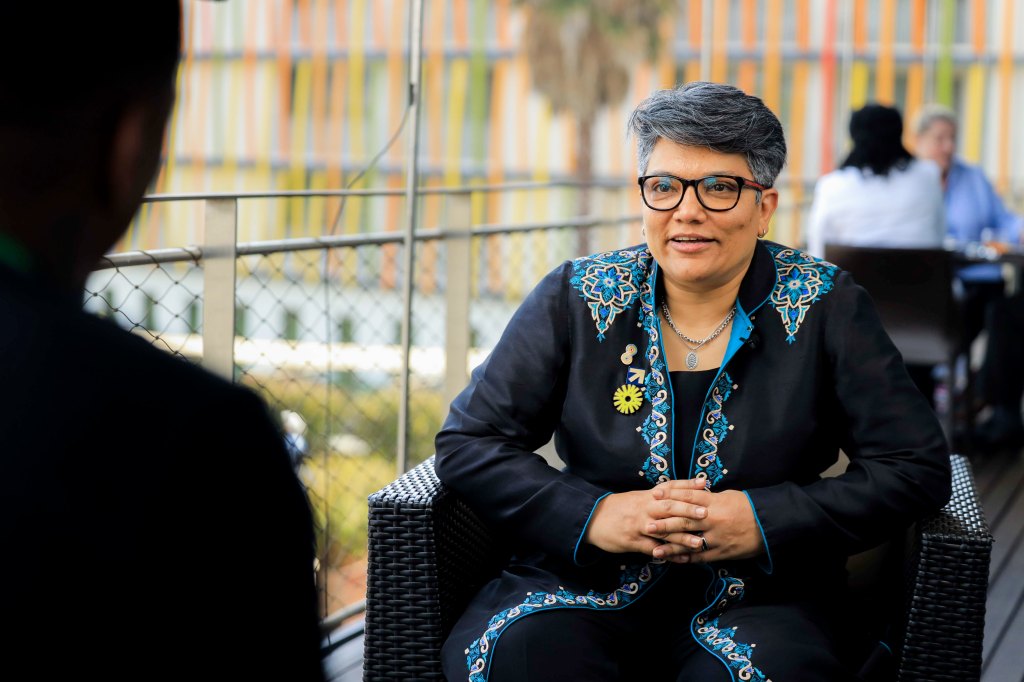
Monika Štěpánová
If they only said, “Oh, you look nice, and by the way, what you do is interesting,” and then stuck to the business talk, that would be okay. But these guys asked what I do, then started complimenting me nonstop. I had to say, “Sorry, were you saying something?” and try to steer the conversation back. But then, again, compliments. And all I want is to have the same business conversation you were having before I joined!
I went to your Instagram and noticed that you’re not just a businesswoman, but also a sportswoman. In what ways does sport, particularly dance, help you in business?
Sport is a huge part of my life. Before I started dancing, which actually wasn’t that long ago, I was a professional swimmer for 16 years. I was on the Czech national team and even qualified with the B-limit for the Olympics.
That experience taught me discipline, and I’m grateful for that every single day. It really shows you what it means to commit to something difficult. There are so many hard days, when you’re tired, frustrated, disappointed, and it feels like it’s not worth it. But you keep going. And then comes that one race or one moment when you realize, yes, this is why I’m doing it. It’s all worth it.
Even though I don’t swim anymore, I dance now, and sport is still my way to clear my head. I always say, if I don’t do sport, I go crazy. It keeps me motivated, in shape, and mentally focused. I honestly can’t imagine my life without it.
Starting professional sport so young, around age six, taught me a lot. It also helped me become independent. With the national team, I was constantly traveling, meeting swimmers from all over the world. So when I went to apply for my first job and they asked me about experience, I said, “Well, I was a professional swimmer.” And even if that wasn’t work experience in the traditional sense, people understood right away what that meant in terms of character.

So between your PhD, your startup, sports, and also volunteering – how do you manage your time? Could you share some practical tips? Also, do you sleep?
My sleep schedule isn’t as good as it should be. I’m actually reading the book Why We Sleep by Matthew Walker right now because I know how important it is. And I’ve definitely underestimated it. So I’m trying to put more pressure on myself to sleep better.
As for time management, I’d say again, it comes back to sport. It gave me discipline. And honestly, I’d be bored if I wasn’t constantly juggling things. I still often feel like I could do more, but my colleagues or friends look at me and say, “Are you crazy? What kind of hours does your day have?”
I really do try to sleep 7 to 8 hours, though, because my body definitely notices when I don’t. It’s not just the dark circles: my back starts hurting, my knees too, and I get sick more easily. My body basically says, “Monika, we need rest. We can’t keep going at this pace without recovery.”
I’m also working with a mental coach now, because I think I have a bit of a dopamine addiction. I constantly need to be doing something, achieving something. It’s hard for me to relax. On a day when I do nothing, I feel really uncomfortable. I keep telling myself, “You shouldn’t be resting,” which isn’t healthy. But I’m working on that.
That was actually my next question. Are there any downsides to being this can-do woman who takes so much on herself? And when you’re constantly in motion, how do you unwind?
Yeah, definitely. I’m really hard on myself, and my friends tell me that all the time. I’m trying to learn how to work with it, because I’ve noticed that when someone comes to me and says they’re sad or feel like they’re not doing enough, I’m great at giving advice. But when it comes to myself, I don’t offer the same support. I’m like, “What are you doing? Go for a run today!”
So I’m trying to change that. Last year was extremely hard for various reasons, and I realized that if I’m not okay mentally, I can’t lead a company. I’m constantly tired, I lose motivation. That was a big wake-up call, and now I’m putting much more focus on mental health.
As I mentioned, I work with a mental coach. She is helping me figure out how to actually rest, and what kind of rest works for me. I’ve learned that doing nothing doesn’t help. I need active rest.
But I also need to make sure it’s real rest, not just another dopamine-hunting activity disguised as relaxation. It’s a process, and I’m still figuring it out.
So what’s an example of something that counts as active rest, but isn’t necessarily achievement-driven?
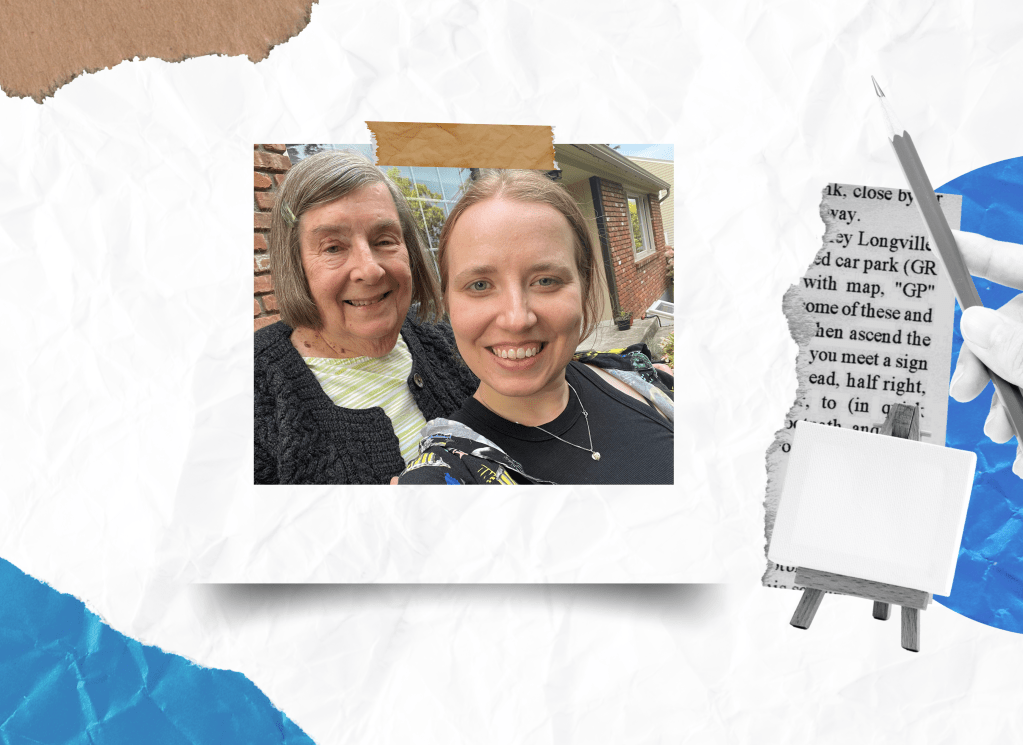
Recently, I started painting by numbers, which is actually really relaxing. But it’s still hard for me to just turn off my mind, sit with the painting, play some music, maybe light a candle, and simply be with myself. I’m working on that.
For a long time, I also underestimated the importance of my social life. So now I try to go on short trips with my friends, or go for a run or a swim together. It can still be active, but it’s not about performance. It’s about connection.
Before, I’d say 90% of my day was work. So when work got frustrating, everything felt frustrating. That’s why I’m trying to build more balance, so if one part of life isn’t going great, there are other areas that still bring me peace, motivation, and joy.
What would make your life easier?
Honestly, I’m a huge Harry Potter fan, and I always wished I had Hermione’s purse – you know, the one where everything fits. That, and a time-turner!
Editor’s note: Monika Štěpánová’s startup Lightly Technologies was a finalist in one of the last edition of EIT Jumpstarter. W Insight is a media partner of the program.
Interview by: Joanna Socha
Edited by: Joanna Socha, Phyllis Budka
Photos provided by Monika Štěpánová
 W Insight
Leave a comment