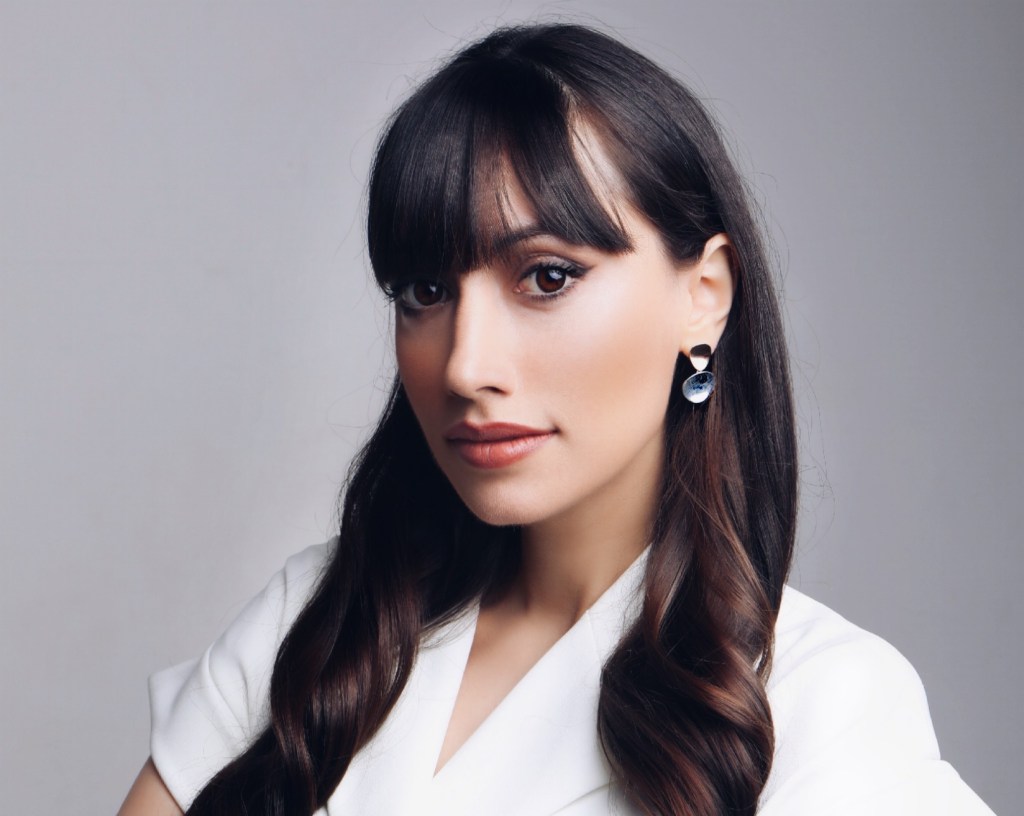
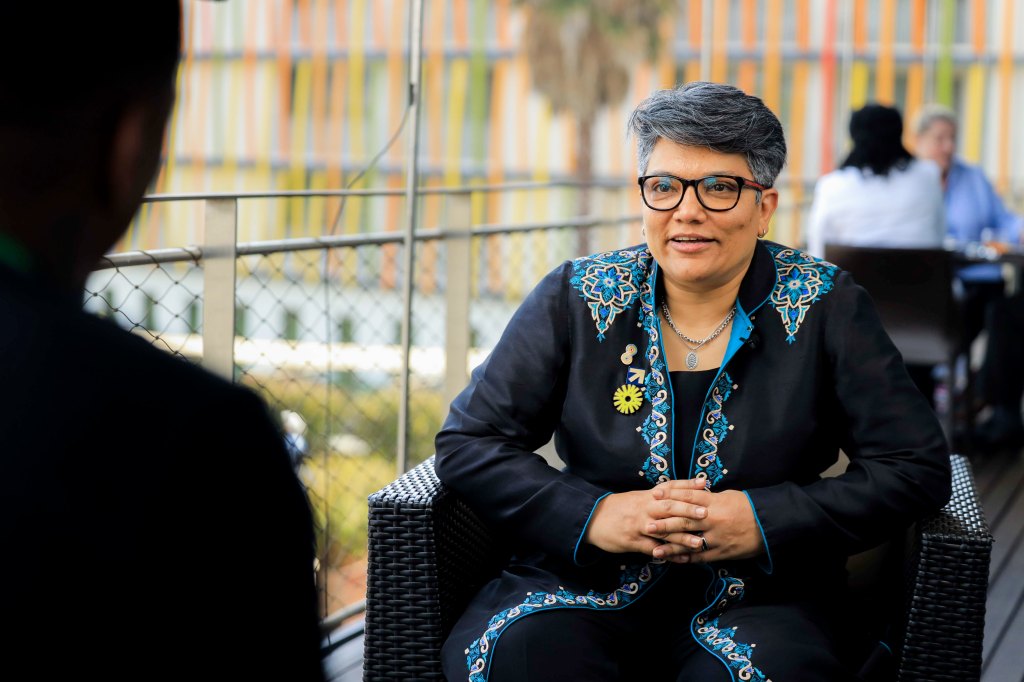
In the interview with W Insight, Serena discusses how she transitioned from working full-time for leading law and financial institutions in London to running her own startup, and what it takes to have a multidisciplinary career.
Joanna Socha: Lawyers are often perceived as risk-averse, yet you decided to give up a successful legal career for a biotech startup. What was your thought process when making the move?
Serena Kern: It’s true that lawyers tend to be very risk-averse, and there are many instances where I am exactly this way. But I also like to take calculated risks. Sometimes, an opportunity presents itself, and you don’t want to miss out. I don’t want to be ten years down the line, look back, and think: “If only I had pursued that.”
It’s also true I was very excited when I first got into a “magic circle” firm in London (edit. a group of the five most prestigious law firms in the UK), especially coming from a small town in Southeast India. I worked at Slaughter and May for five years, and then I went to the Bank of England and HM Treasury, where I held a senior leadership positions. But there came a time, when I asked myself what really drives me? I have always been ambitious, but at the same time, I’ve always wanted to make a positive change in society. This need to contribute to society has been the driving force behind my decision.

I have a sister who is a phenomenal scientist; in the past she co-authored two “Nature Communications” papers when she was still under 30.
Carina was getting really interesting results with her research on longevity science. And her being a scientist, my background being law and operations, we thought it makes sense for us, a female powerhouse, to set up a company together. And so that’s how the biotech startup came about. Our labs are based at the Babraham Research Campus in Cambridge.
And that’s another factor that played into my decision: you must follow the data. While we knew the AI platform had transformative potential, it was at the end of the day the data generated that made me take the plunge. There is so much scope to make a positive contribution for humanity. What she has discovered is a way, for the first time ever, to block unprogrammed cell death. And the implications of this are vast. When we realized the implications, of course, I wanted to be part of that journey. And like I say, my sister is brilliant. And we have such a great relationship, sometimes we say to each other, it’s as if we’ve been training to be on the same team from birth.
There’s no competition between you at all?
No, truly! Also, our spheres are so different: hers is science, and I know the law and finance; I’ve got expertise in operations and execution, and we’ve managed to marry those two skills really well together. Of course we have also now built a brilliant team to help us.
What was your fundraising process? There is so much research about women-founded startups raising a fraction of what men get for a comparative solution.
I’m not going to lie and say we haven’t had difficult experiences with some potential investors.
There were times when my sister and I would go into meetings, and the questions we got asked were, “are you aware of the risks?”; whereas when our male co-founders were in the room the questions immediately pivoted to the “vision” and the “potential”, which I think is really interesting. It becomes a very different conversation.
At the same time, we’ve been lucky enough to get the backing we’ve needed so far. Of course, the fundraising journey will continue, as it always does. And I’m sure we’ll come up against more hurdles. But Carina has always said: “Look, people might underestimate you, but they can’t argue with the data.”
And that’s a fact! It doesn’t matter what I look like or how young I am. Look at the data!
But I also think the challenges are very typical of the entrepreneurship world. When I was at Slaughter and May, or the Bank of England, I did not face such questions. Nobody questioned why I was there because I had the weight of an institution behind me. What is really interesting is when you do a startup like this, you’re starting again from scratch. I don’t have an institution behind me anymore. And it is a lot more difficult to break down those kinds of perceptions. But it’s possible.
Tell us more about how LinkGevity is developing.
Our company is using artificial intelligence to analyze pathways involved in late-life disease and tissue deterioration. Using a novel process we have already uncovered a novel drug, in record time. The potential commercial applications of this single product are vast, for instance it can be used in tissue engineering to facilitate lab grown organs, or clinical use to stop necrosis in late-life diseases. Our plan is to continue to develop our AI platform whilst at the same time license our drug discoveries for maximum impact.
LinkGevity’s AI solution is based on the “Blueprint Theory of Aging”, developed by my sister Carina and co-authored by Prof. Richard Faragher, Dr Annalisa Jenkins, Prof. Justin Stebbing, Prof. Joseph V. Bonventre.
Have you run clinical trials already?
So far, we have extensive lab data. As I mentioned, the potential of the drug we have already discovered is vast. It traverses the R&D space where we don’t need clinical trials. However, we do also want to target certain deteriorative diseases and for that we are planning clinical trials next year.
What are your goals for LinkGevity for the next few years? What would you like to accomplish?
We are still realizing the full potential of the necrosis drugs that our AI has discovered. We want to leverage the full potential of these drugs both to treat disease but also in the R&D space. For example, being able to stop necrosis could catalyze research that will allow organs to be grown for the very first time in a lab, which has never been done before. From a sustainability perspective, from an actual treatment and helping patients perspective, it’s huge! And we can definitely achieve that in two years. We will of course also continue to advance our AI to make further discoveries.
Apart from the impressive law and entrepreneurship career, you have a record label and quite some successes in the music industry. How do you find time for it?
I have never tried to “make time for music” as such. Music has always been my passion and hobby. It’s how I express my creativity, and my emotion and I find it to be a great outlet. When either it’s a really stressful period, or I need to detach for a bit from whatever I’m doing, I write something or I have a play with ideas in my home studio.
It’s the same with me. I love painting, and it’s truly an outlet for my emotions. I sometimes even think that the more sensitive I am, the better the work.
This is why, like I said to you, I don’t think I could make a career out of it because I don’t think I can ever wake up and decide I must write a song. It just doesn’t work like that. There needs to be something that triggers the writing of the song. And the writing of the song is actually the way I relax. Turning it into a full-time career would take away the very purpose it serves in my life.
I started a record label, as I wanted to support other upcoming female artists but it’s not something I see as a business, more a social enterprise.
Do you see sensitivity as a strength or a weakness?
I have always just tried to be myself rather than change my behavior, depending on whom I’m meeting. I’m a very strong-willed person, but yes, I am also sensitive. It keeps me tuned in to the emotions of those around me . So, I would definitely say it’s a strength. My sister is much more thick-skinned, actually. This is why, again, I think we make quite a good team because we could be sitting in the same meeting, and I’ll come out, and I’ll think, “oh, that wasn’t very nice.” And she’s like, “who cares if he/she is nice as long as we get the job done.”
I would like to have this “I don’t care” approach more often.
Sometimes directness is necessary, but sensitivity can also be useful. You’re reading the room, you’re reading the cues, and that makes you dynamic. I would never see it as a weakness. And I really don’t like the idea of labeling anyone as being “too sensitive.”
The important thing as a leader in whatever you do is to recognize that every person is different, and you have to remember the difference as a strength. There’s no question of that.
What does your typical day look like?
I’m definitely a morning person and I start the day early. I pray for about 15 minutes as I like to start with a peaceful mindset.
I keep meticulous to do lists, but prioritizing in a start-up is crucial as you never know what the day will bring! Of course that’s what makes it all very interesting. Keeping your eye on key milestones is a must and anticipating curve balls is something I do well.
During the day, which can get very hectic, I do try and take time out. I’ll for example go for a walk, or sometimes I write a bit of music, which is nice. Sometimes, I’ll have a recording session in the evening which is a great way to unwind.
Any advice for W Insight readers about undergoing career change in life?
Take calculated risks. This is my first piece of advice. When you’re making a career change always let the data guide your decisions. And for any of your readers who are thinking about doing a startup, please remember that building the right team and securing early supporters is really crucial. There’s always a way of finding funding. But like I’ve said before, the real question is at what cost? Early on, focus on identifying those who truly share your vision and will join you on the journey, adding value in meaningful ways. Your team is like the foundation of your venture- make sure the foundations are solid.

 W Insight
Leave a comment